
We’ve all been there: checking our phones every thirty seconds, losing our appetite, and feeling that bizarre mix of euphoria and nausea whenever that specific person walks into the room. We call it “The Spark,” “The Honeymoon Phase,” or, in psychological terms, Passionate Love.
While poets describe this phase as a matter of the heart, science tells a different story. According to neurobiologists and psychologists, the early stage of romance is actually a biological takeover—a distinct narrative arc where your brain chemistry is rewritten to ensure you bond with a mate.
Here are the five most impactful, and often counter-intuitive, things happening inside your body during the initial phase of your relationship.
1. Passionate Love as Addiction: The Dopamine Reward System
We often describe love as a feeling, but neurobiologically, the early stages of passionate love look less like an emotion and more like a drive. When you fall in love, your brain activates the ventral tegmental area (VTA) and the caudate nucleus. These are part of the brain’s reward circuit—the primitive network that governs motivation, craving, and focus.
This activation floods your system with dopamine, the neurotransmitter associated with pleasure and goal-directed behavior. Consequently, the “high” of new love is chemically similar to the high produced by addictive substances like cocaine. This explains why new lovers display addictive behaviors: intense craving, distorted reality, and a willingness to take huge risks to get their “fix” of the other person.
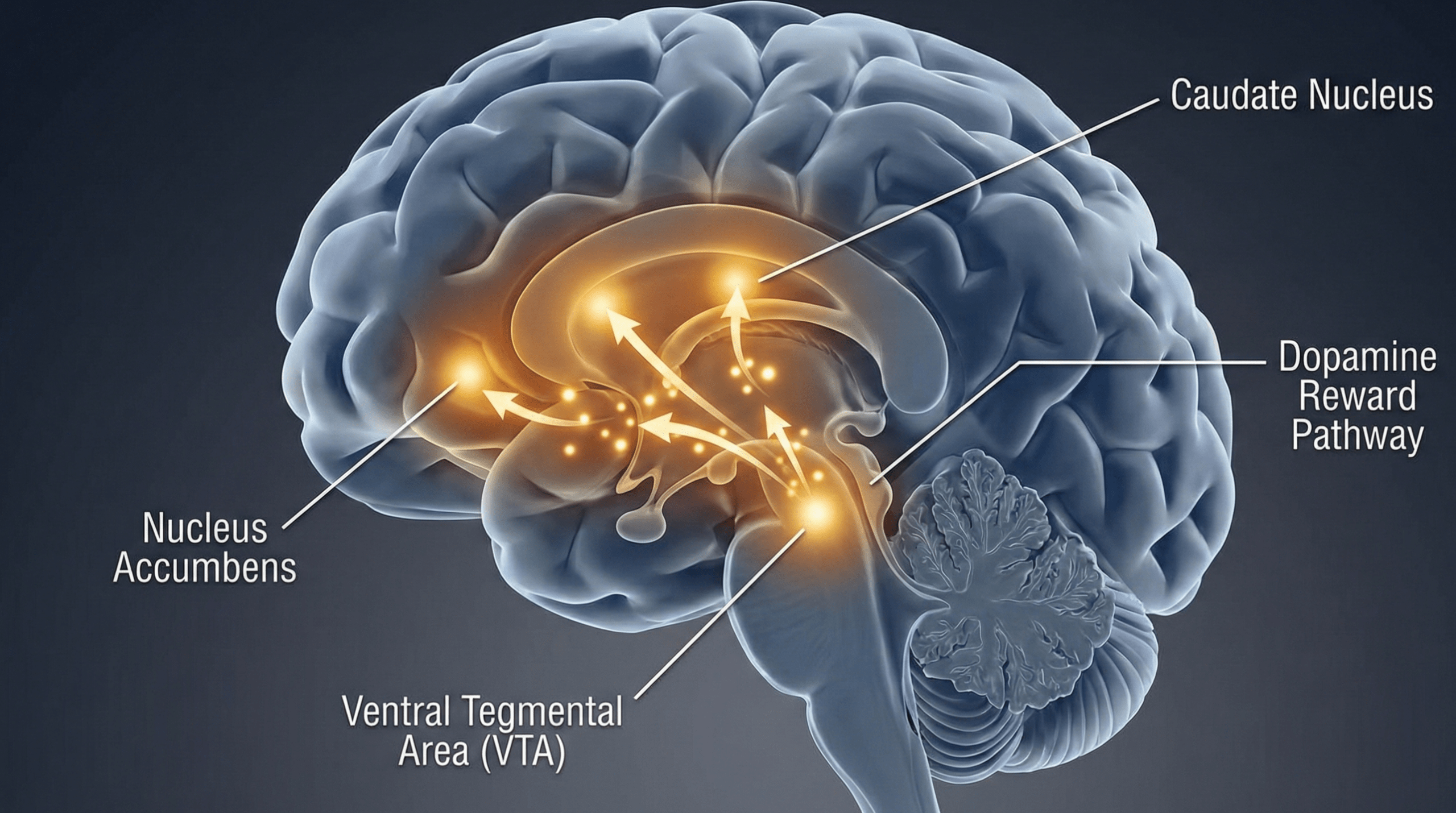
“Photos of people they romantically loved caused the participants’ brains to become active in regions rich with dopamine, the so-called feel-good neurotransmitter.”
2. The Serotonin Dip: Why Passionate Love Triggers Obsessive Thinking
Have you ever wondered why you can’t get a new partner out of your head, to the point where it disrupts your work and sleep? It isn’t just affection; it is a chemical imbalance.
Research indicates that during the early stages of romantic love, serotonin levels plummet. Low serotonin is a marker also found in patients with Obsessive-Compulsive Disorder (OCD). This depletion precipitates “intrusive thinking”—obsessive, maddeningly preoccupying thoughts that you cannot control. You aren’t just choosing to think about them; your brain chemistry has removed the brakes that usually stop you from obsessing.
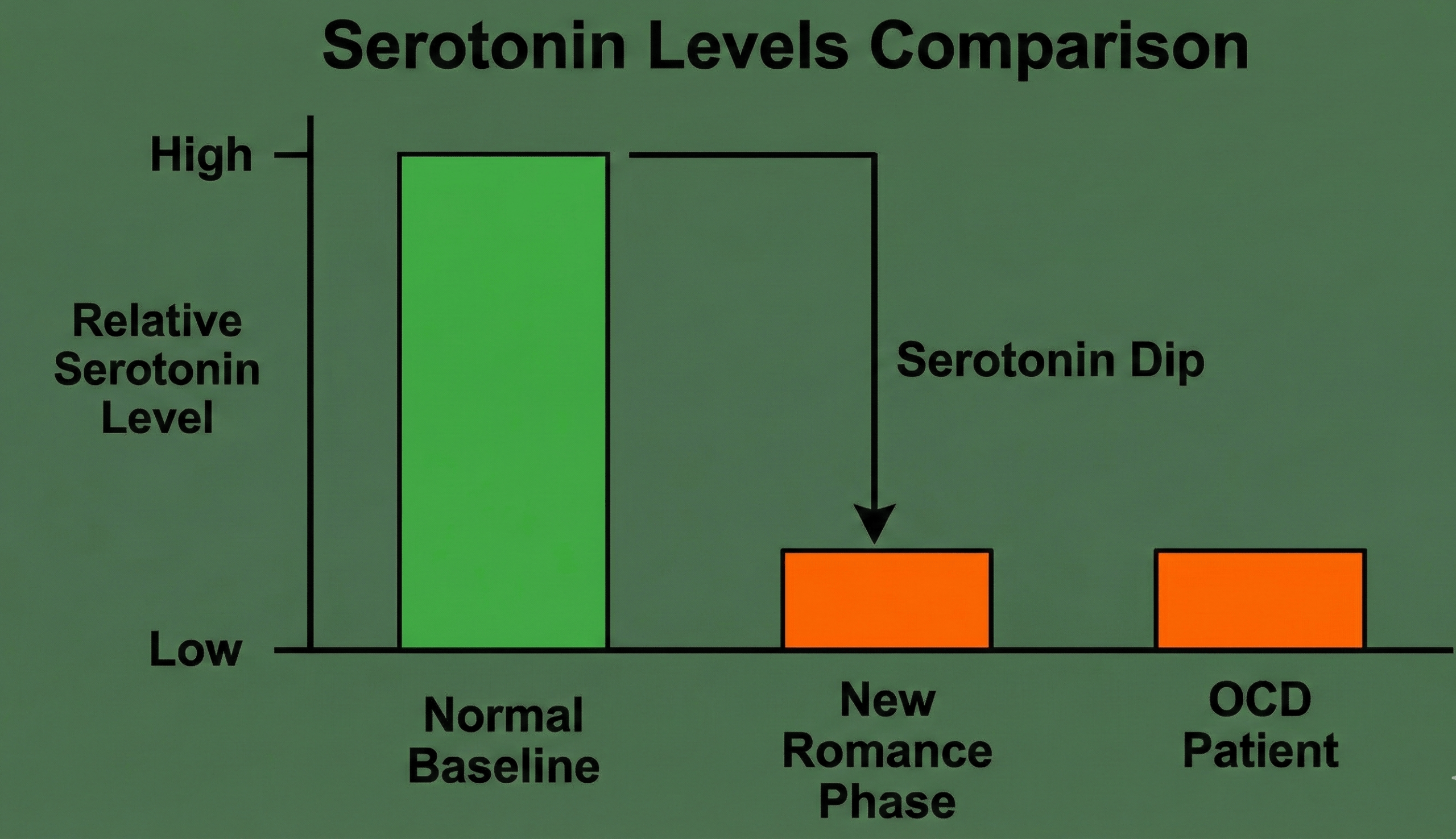
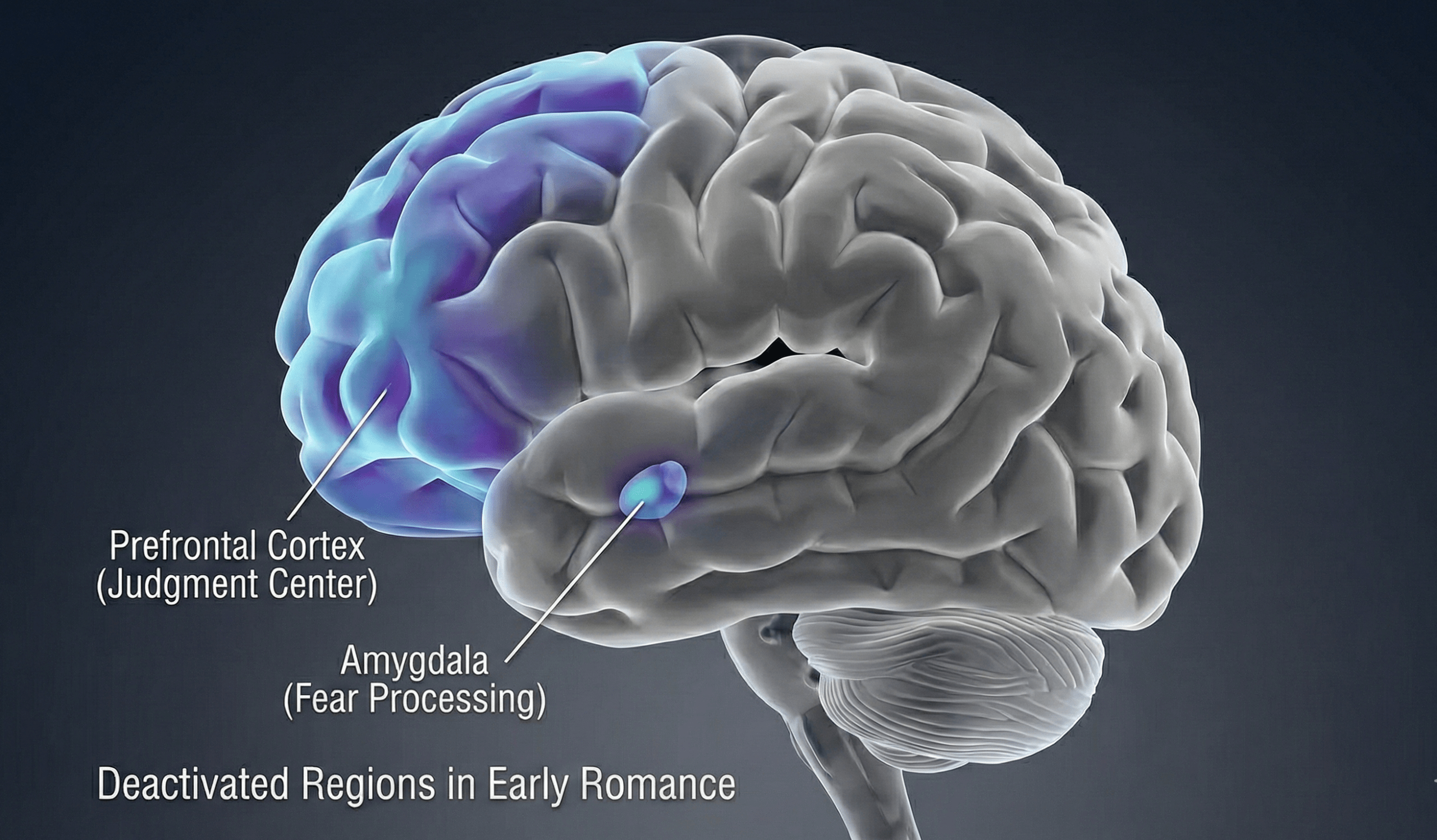
3. Neurologically Blind: Deactivating the Prefrontal Cortex in Early Romance
The old adage “love is blind” is scientifically accurate. During the rush of passionate love, the brain doesn’t just activate reward centers; it actively deactivates the areas responsible for critical judgment and fear.
Activity decreases in the prefrontal cortex (rational thought) and the amygdala (fear processing). This neural deactivation explains why we often ignore red flags or overlook flaws during the first few months of a relationship. Your brain is wired to prioritize the bond over rationality, suspending judgment to ensure the attachment takes hold.
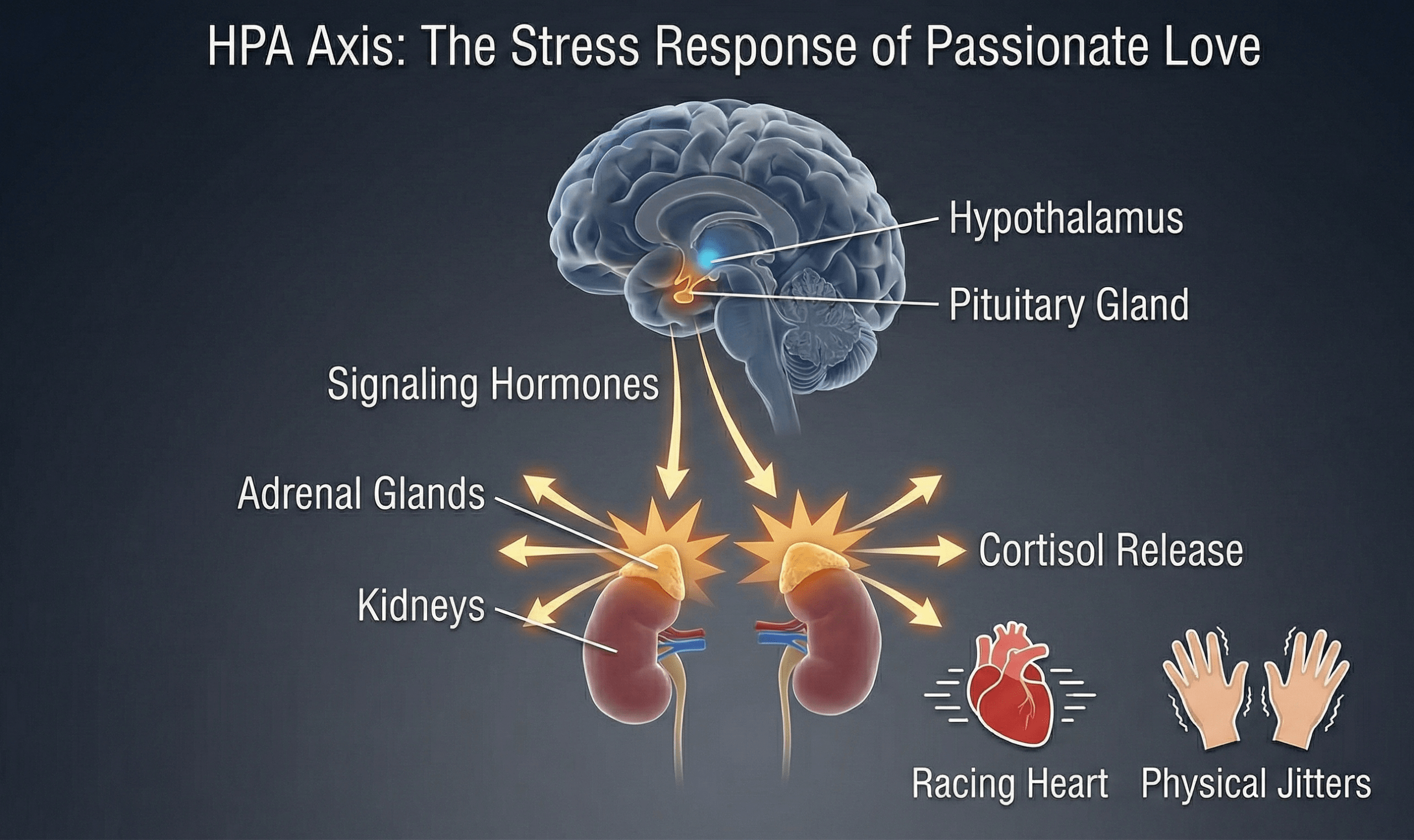
4. The Stress Response of Passionate Love: Why Cortisol Spikes in New Relationships
We tend to think of love as a source of comfort, but the initial phase of a relationship is actually a physiological crisis. The uncertainty and intensity of early attraction trigger the body’s stress response system.
Contrary to the relaxation found in long-term attachment, early passionate love causes levels of cortisol (the stress hormone) to spike. This hormonal surge prepares the body to cope with the “crisis” at hand, resulting in physical symptoms like trembling hands, sweaty palms, and a racing heart. It is an exhaustingly high-arousal state that keeps you on high alert for signs of reciprocation or rejection.
5. The Self-Expansion Model: How Passionate Love Rewires Your Identity
Perhaps the most profound psychological shift in early love is Self-Expansion. According to the self-expansion model, we are fundamentally motivated to increase our ability to achieve goals by acquiring new resources and perspectives.
When we fall in love, we rapidly “include the other in the self”. We don’t just get to know a partner; we cognitively merge with them, adopting their perspectives, social status, and resources as our own. This rapid expansion of the self-concept is exhilarating and is one of the primary reasons new relationships feel so life-affirming—you are literally becoming a “larger” person psychologically.
Summary: The Essential Crisis
The science makes one thing clear: Passionate Love is metabolically expensive and chemically unsustainable.
The body simply cannot maintain the state of high cortisol, low serotonin, and dopaminergic overdrive forever. This “temporary insanity” typically lasts between 6 to 30 months. Eventually, the fever must break. For a relationship to survive, the neurobiology must shift from the dopamine-driven thrill of wanting to the oxytocin-driven calm of having—a transition into Companionate Love.
Companionate Love vs Passionate Love: Why Happy Marriages Need FriendshipSo, if the “spark” is biologically designed to burn out, why do we culturally prioritize passionate love above the sustainable warmth of long-term companionship?
Research Sources
- Acevedo, B. P., Aron, A., Fisher, H. E., & Brown, L. L. (2012). Neural correlates of long-term intense romantic love. Social Cognitive and Affective Neuroscience, 7(2), 145-159. https://pubmed.ncbi.nlm.nih.gov/21208991/
- Aron, A., Lewandowski, G. W., Mashek, D., & Aron, E. N. (2013). The self-expansion model of motivation and cognition in close relationships. The Oxford Handbook of Close Relationships. https://psycnet.apa.org/record/2013-08638-005
- Cherry, K. (2025). Passionate Love vs. Compassionate Love: What’s the Difference?. Verywell Mind. https://www.verywellmind.com/compassionate-and-passionate-love-2795338
- Fisher, H. E., Aron, A., & Brown, L. L. (2005). Romantic love: An fMRI study of a neural mechanism for mate choice. Journal of Comparative Neurology, 493(1), 58-62. https://pubmed.ncbi.nlm.nih.gov/16255001/
- Marazziti, D., Akiskal, H. S., Rossi, A., & Cassano, G. B. (1999). Alteration of the platelet serotonin transporter in romantic love. Psychological Medicine, 29(3), 741-745. https://pubmed.ncbi.nlm.nih.gov/10405527/
- Murray, D. R., et al. (2019). Falling in love is associated with immune system gene regulation. Psychoneuroendocrinology, 100, 17-26. https://pubmed.ncbi.nlm.nih.gov/30299259/