



Most of us try to pay off our Sleep Debt on the weekends, but the secret to sustained high performance is actually Sleep Banking. You grind through a chaotic work week without sleep, telling yourself you will fix it on Saturday. You treat sleep like a credit card: spend now, pay later.
It feels logical—an hour lost is just an hour owed, right? Unfortunately, your biology disagrees. The “sleep debt” model we casually reference in conversation is dangerously misleading. Relying on “catch-up” sleep is a biological trap.
Why You Can’t Pay Off Sleep Debt
Current research into sleep recovery dynamics suggests that the physiological cost of sleep loss is not a simple transaction. When you rely on the weekend Binge Sleep strategy, you are engaging in what researchers call Chronic Sleep Restriction.
The science is sobering: a single night of recovery sleep, even up to 10 hours in bed, is often insufficient to fully restore neurobehavioral functions like vigilance and reaction time after a week of restricted sleep [1].
Worse, by dramatically shifting your sleep window on weekends (waking up at 10 AM instead of 6 AM), you induce Social Jetlag. This misalignment between your social schedule and biological clock disrupts circadian rhythms and is linked to metabolic risks and poor nutrient intake, such as increased sugar consumption [2, 8].

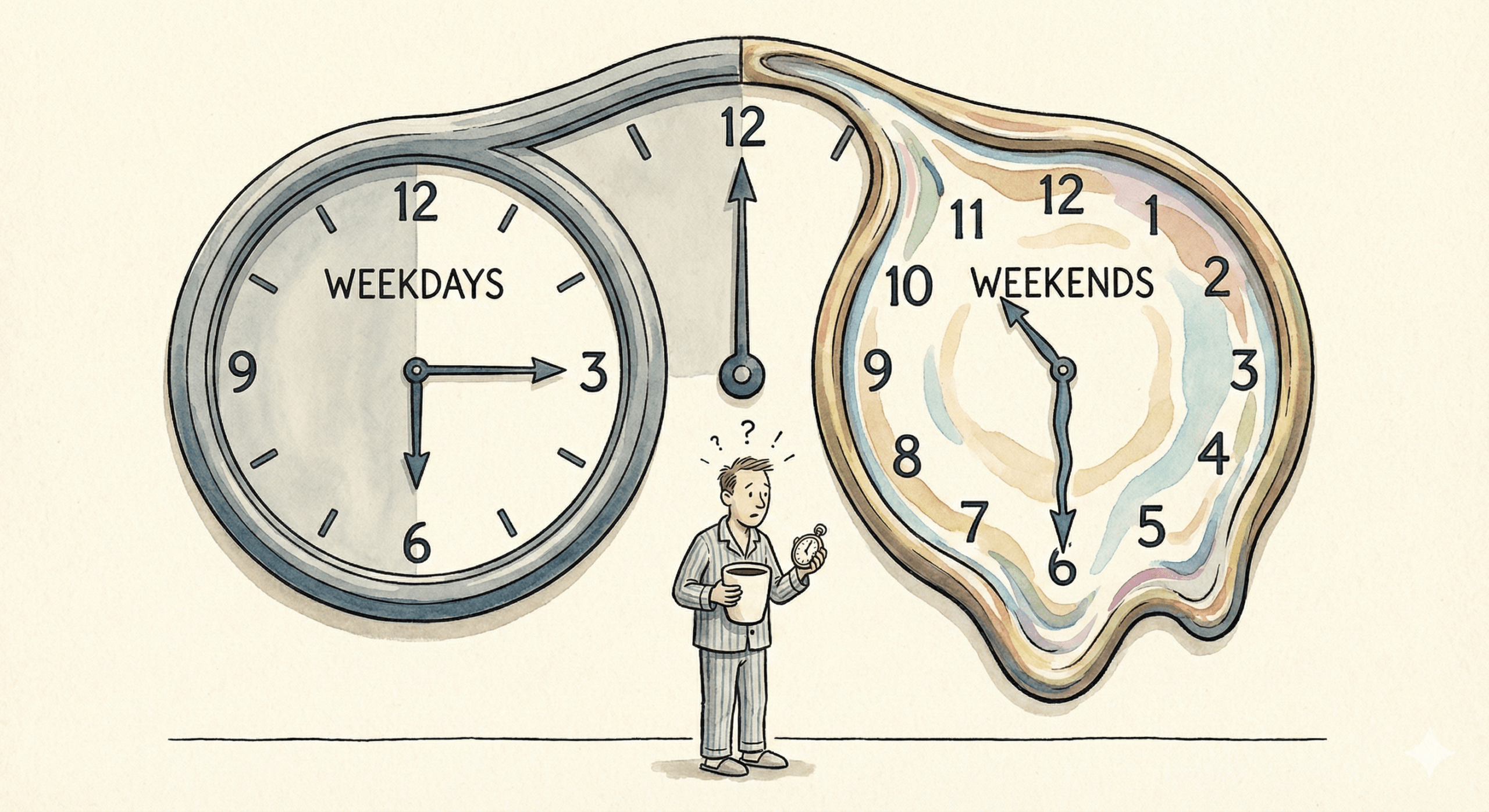
“However, the sleep restriction was severe enough that recovery of alertness was not complete following a single night of extended sleep, indicating a residual sleep debt remained. Lifestyles that involve chronic sleep restriction during the workweek and during days off work may result in continuing buildup of sleep pressure.” [3]
What is Sleep Banking?
Sleep banking is a proactive strategy where individuals extend their sleep duration in the days leading up to a period of anticipated sleep loss. By building this biological reserve, you create a buffer that protects cognitive performance and slows the rate of decline during subsequent sleep deprivation.
To win the war against exhaustion, we have to stop chasing debts and start building equity. The turning point in sleep science came with the realization that prior sleep history dictates your future resilience.
Instead of reacting to exhaustion after it happens, you extend your sleep before a demanding period begins. In seminal studies, participants who extended their sleep to 10 hours a night for a week prior to a period of sleep restriction showed significantly less performance impairment than those who slept their usual 7 hours [4].
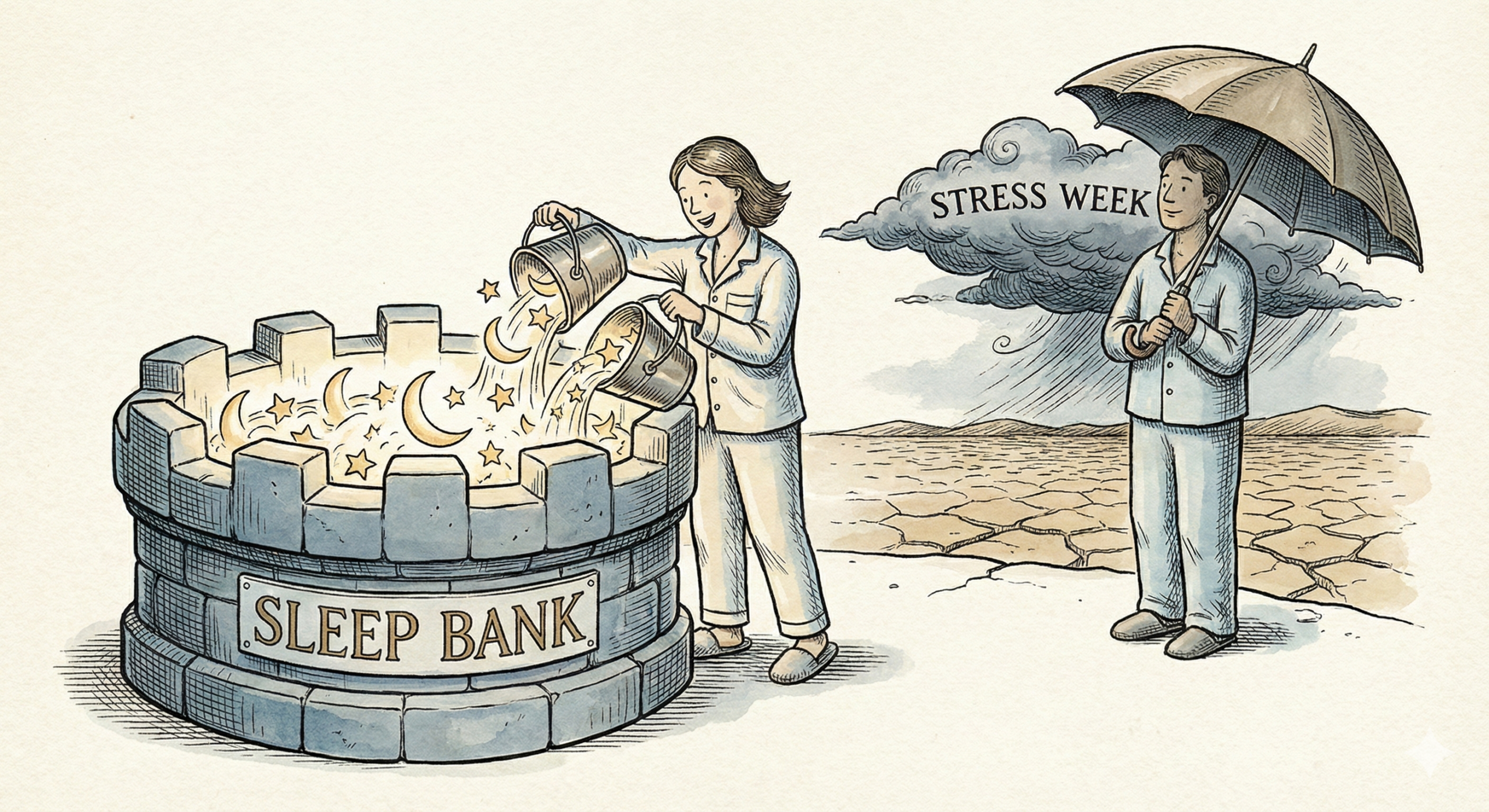
Think of this as a biological buffer. When you “bank” sleep, you are not just resting; you are proactively charging your neurobehavioral battery. The “banked” sleep slows the rate at which your performance crashes when you are eventually forced to cut sleep short.
This stands in stark contrast to the “catch-up” method, which fails due to re-exposure vulnerability. Research indicates that individuals who have recently recovered from sleep debt crash much faster when exposed to sleep restriction again compared to those who were fully rested [5].
3 Ways to Manage Your Sleep
How do we implement this in a 24/7 world where a perfect 8-hour night isn’t always possible? The resolution lies in abandoning the all-or-nothing approach and embracing tactical scheduling. Based on military and occupational research [6], here are three evidence-based strategies.
1. Bank Sleep Prophylactically
If you anticipate a heavy work period, a deadline crunch, or travel, do not wait until it starts to manage your energy. One week prior, extend your time in bed. Even a modest extension builds the “reserve” that will protect your cognitive throughput when the inevitable late nights arrive.
2. The Split Sleep Protocol
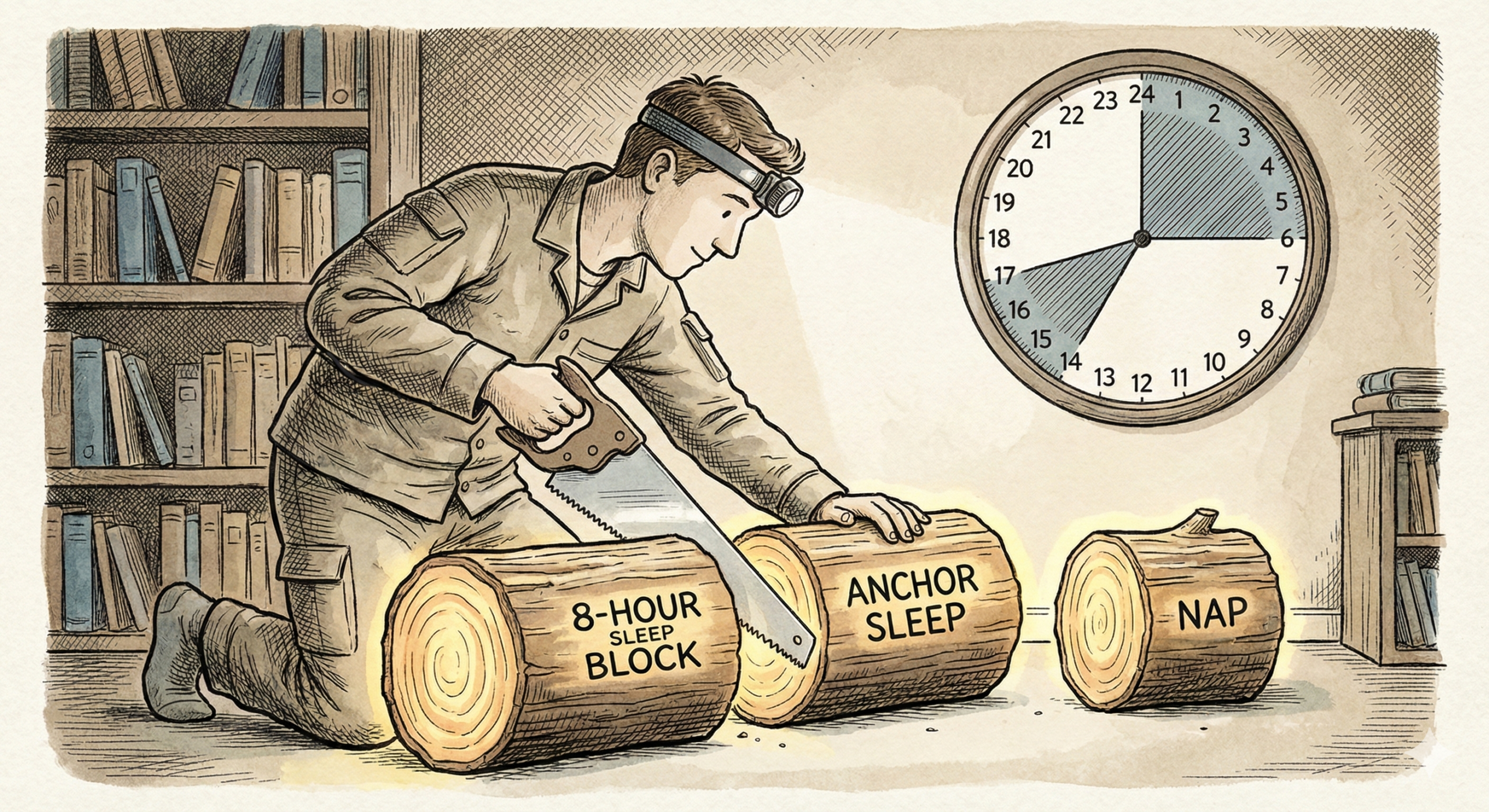
If a consolidated 8-hour block is impossible, do not despair. Research on continuous operations shows that performance can be maintained by splitting sleep into shorter chunks—such as a “nocturnal anchor sleep” combined with a daytime nap. As long as the total sleep time per 24 hours remains adequate, cognitive performance declines at the same rate whether the sleep is taken in one block or split into two [7].
3. Stabilize the Window
To avoid the metabolic and circadian costs of social jetlag, aim for consistency. Even if you are banking sleep, try to keep the midpoint of your sleep relatively stable. Avoiding wild swings in wake-up times protects your circadian rhythm, ensuring that the sleep you do get is chemically restorative [2].
References
- Banks, S., et al. (2010). Neurobehavioral dynamics following chronic sleep restriction. Sleep, 33(8).
- Bouman, E. J., & Rutters, F. (2022). The association between social jetlag and poor health. Public Health Nutrition, 25(9).
- American Academy of Sleep Medicine. (2010). Catching up is hard to do: Negative effects of sleep restriction.
- Rupp, T. L., et al. (2009). Banking sleep: realization of benefits during subsequent sleep restriction and recovery. Sleep, 32(3).
- Banks, S., et al. (2007). Response to sleep restriction depends upon preexisting sleep debt. Sleep, 30.
- Department of Defense. (2021). Study on Effects of Sleep Deprivation on Readiness.
- Mollicone, D. J., et al. (2008). Feasibility of split sleep schedules for space operations. Acta Astronautica.
- Al Khatib, H. K., et al. (2022). Short sleep and social jetlag are associated with higher intakes of sugars. Public Health Nutrition.