


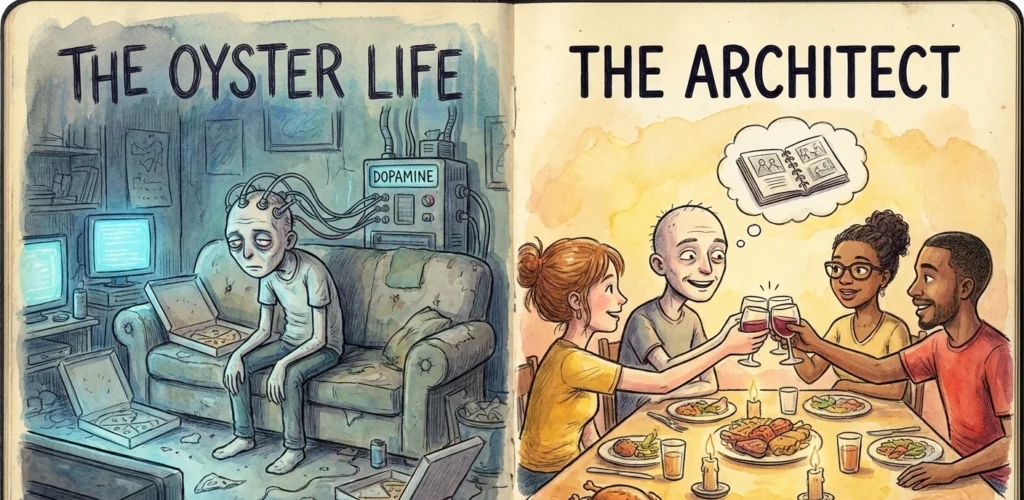
TL;DR – The Satisfaction Cheat Sheet
- The Trap: We treat happiness like math (Good Moments – Bad Moments = Happy Life). This is false.
- The Difference: Pleasure is a biological survival signal. Enjoyment is a constructed human experience.
- The Formula: Enjoyment = Pleasure + Communion + Consciousness.
- The Cost: Pleasure is easy; Enjoyment has “start-up costs” that require effort and discipline.
We often use the words Pleasure vs. Enjoyment interchangeably, as if they are the same thing. We assume that if we can just stack up enough pleasurable moments—good food, a relaxing vacation—we will build a happy life.
But social scientist Arthur Brooks argues that this calculation is a trap. Pursuing “good times” in the wrong way is actually a recipe for misery.
The secret lies in understanding the difference between a biological hit and a human experience.
The Cheat Sheet: Pleasure vs. Enjoyment
| Feature | Biological Pleasure | Human Enjoyment |
|---|---|---|
| Origin | Biological survival response | Human creation |
| Effort | Passive (Happens to you) | Active (Requires “Start-Up Costs”) |
| Context | Solitary (e.g., The Oyster) | Communal (Requires People) |
| Outcome | Addiction / Leaky Jar | Deep Satisfaction |
1. The Enjoyment Formula: Moving Beyond Mere Pleasure
According to Brooks, pleasure is a simple biological response saying, “This is good for survival.” A rat can feel pleasure; a drunk person can feel pleasure.
To transform fleeting pleasure into lasting enjoyment, you must use a specific formula:
Enjoyment = Pleasure + Communion + Consciousness

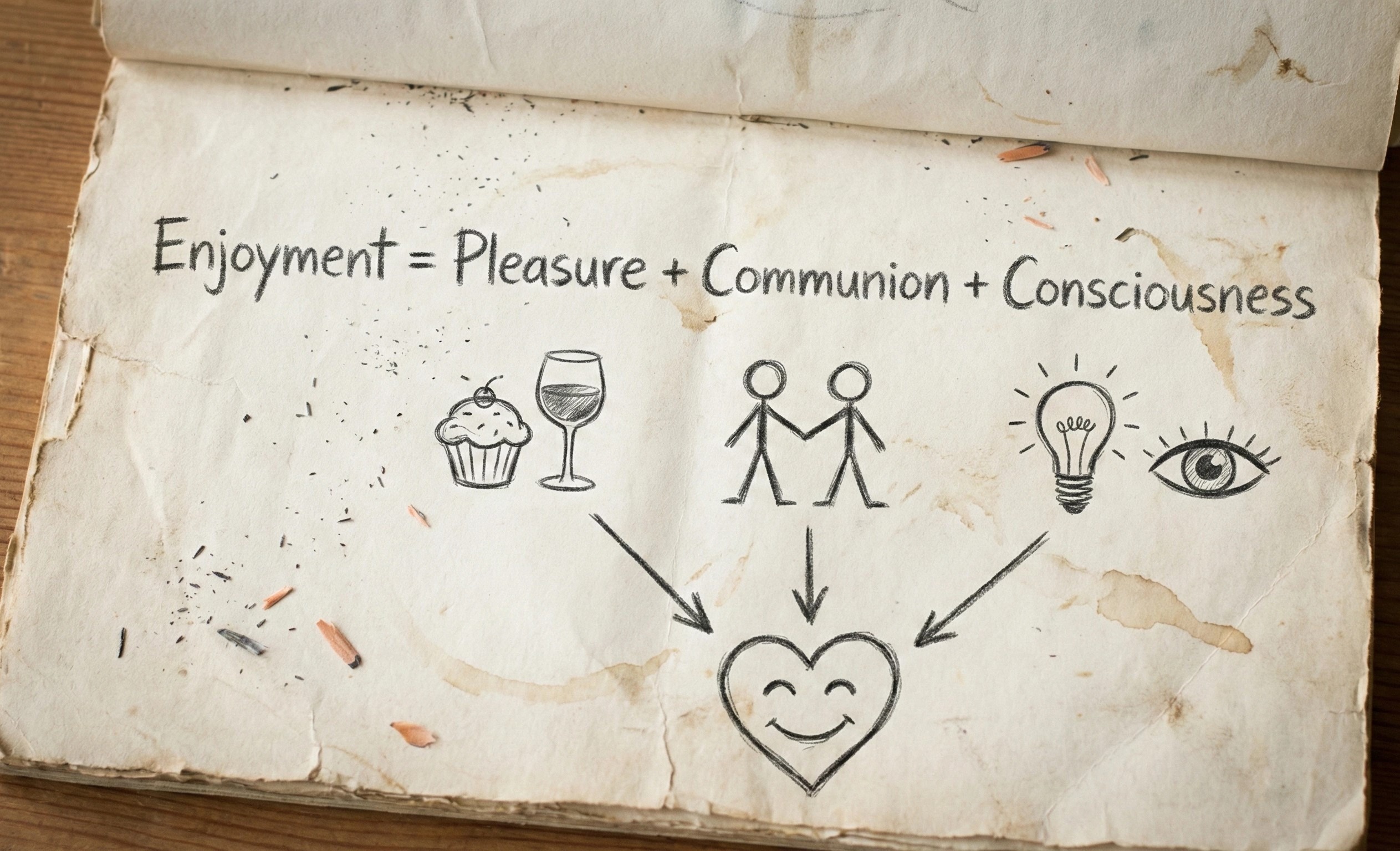
Here is how the ingredients work:
- Communion (Add People): Drinking wine alone to numb yourself is pleasure; drinking wine while debating philosophy with a friend is enjoyment.
- Consciousness (Add Memory): You must engage the mind. Without memory, pleasure is just a fleeting neurological firing.
2. Biological Pleasure vs. Human Enjoyment: The “Jellyfish” Problem
Why isn’t pure pleasure enough? Plato tackled this in the Philebus. He asks us to imagine a life of perfect, uninterrupted pleasure—every physical need met.
But there is a catch: you possess no memory and no knowledge.

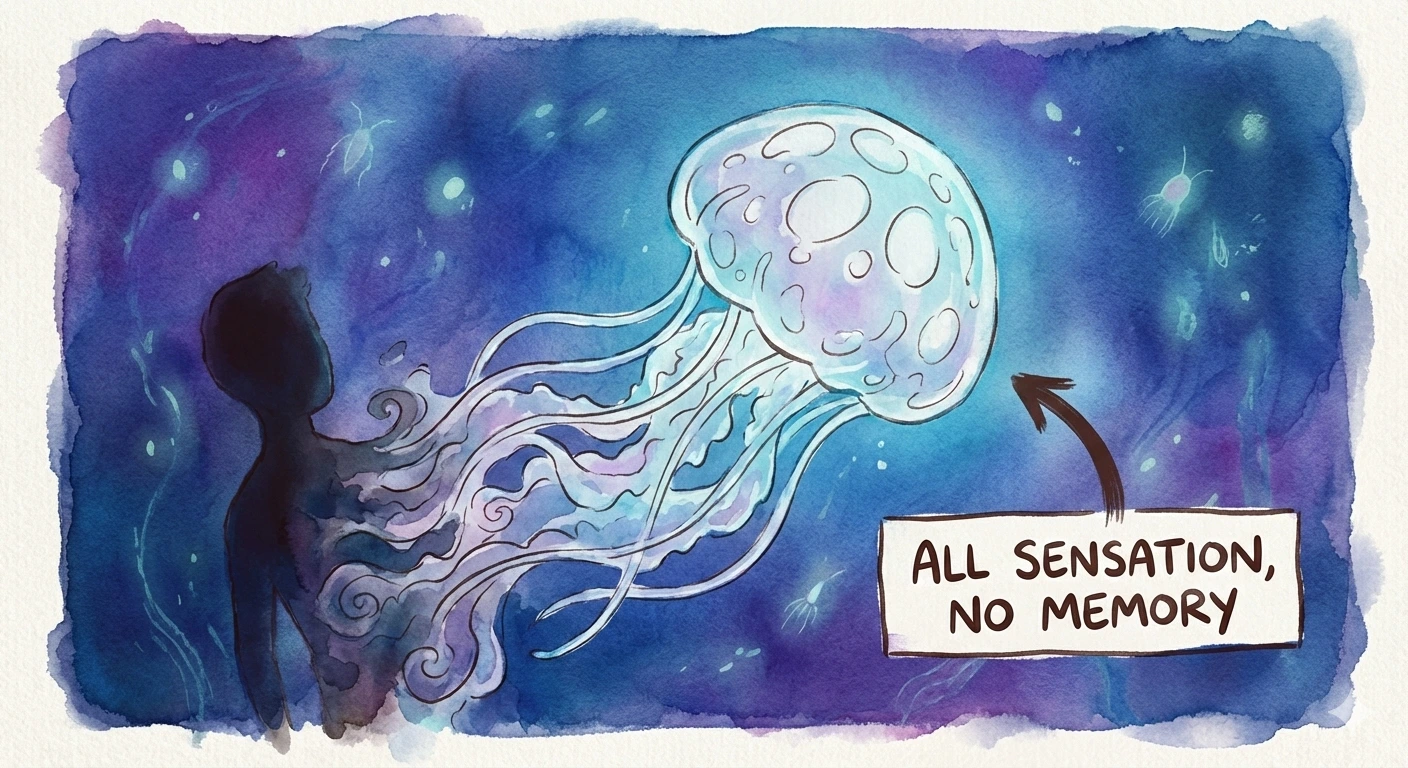
Socrates argues that without the “mind” to structure it, this is not the life of a human, but the life of a “pulmo marinus”—a jellyfish or an oyster. If you chase pleasure without consciousness, you are essentially striving to be a happy clam.
3. The “Leaky Jar”: Why Chasing Pleasure Fails
Plato describes pleasure as “The Unlimited”. It has no natural stopping point. If you itch, you scratch; but the appetite itself is insatiable.
This keeps us on a “Hedonic Treadmill.” We chase rewards because our brains are wired to pass on genes, not to make us happy. As defined by Psychology Today, we eventually return to a baseline level of happiness regardless of how many “good things” happen to us.
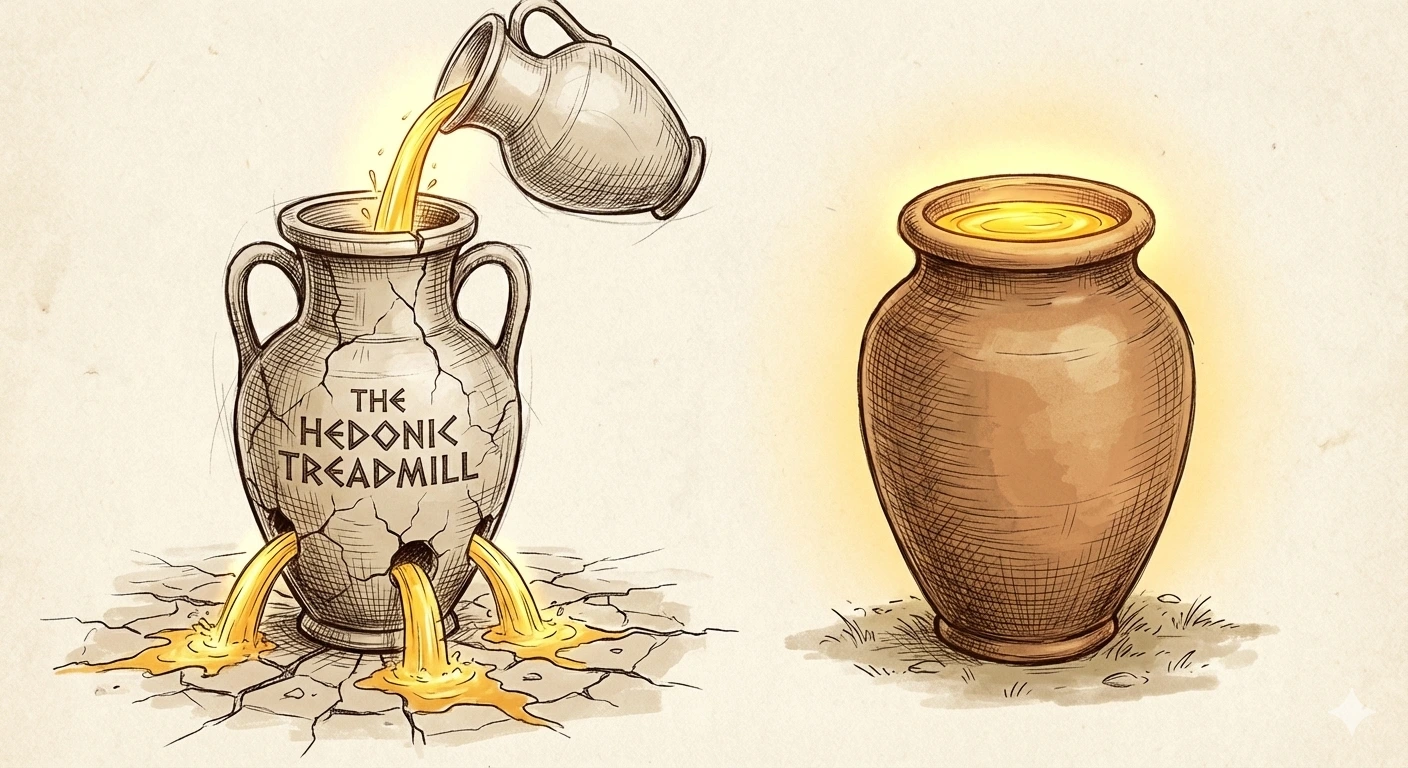
Socrates compares this to pouring water into a “Leaky Jar.” No amount of pleasure can ever fill the void because the vessel itself—the uncultivated mind—cannot hold it.
4. The Cost of Enjoyment: Why You Must Pay the Price
We default to pleasure because it is easy. It requires no effort to eat a donut or scroll social media.
Enjoyment, however, is an “elective” activity. It requires Start-Up Costs: the effort of scheduling time, the vulnerability of conversation, and the discipline of being present.
As Brooks notes, “improvement in these areas requires commitment and effort.” This aligns with our guide on Hustle vs. Curiosity: you must stop “digging holes” (mindless pleasure) and start using a map (conscious enjoyment).
Reflective Challenge: A Homework Assignment
“Look at your leisure time this week. How much of it was spent in the passive receipt of pleasure (the oyster life), and how much was active enjoyment shared with others?”
Frequently Asked Questions
What is the difference between pleasure and enjoyment?
Pleasure is a passive biological response to sensory inputs (like food or rest) that happens to you. Enjoyment is an active human creation that combines pleasure with communion (people) and consciousness (memory).
Why does Arthur Brooks say pleasure isn’t enough?
Brooks argues that pleasure is “solitary” and fleeting. Without adding human connection and awareness, chasing pleasure leads to the “Leaky Jar” effect where satisfaction never lasts.
References
- Brooks, A. C. (2022). “A Happiness Columnist’s Three Biggest Happiness Rules.” The Atlantic.
- Plato. Philebus. (The “Oyster” thought experiment and the concept of “The Unlimited”).
- Plato. Gorgias. (The “Leaky Jar” metaphor).